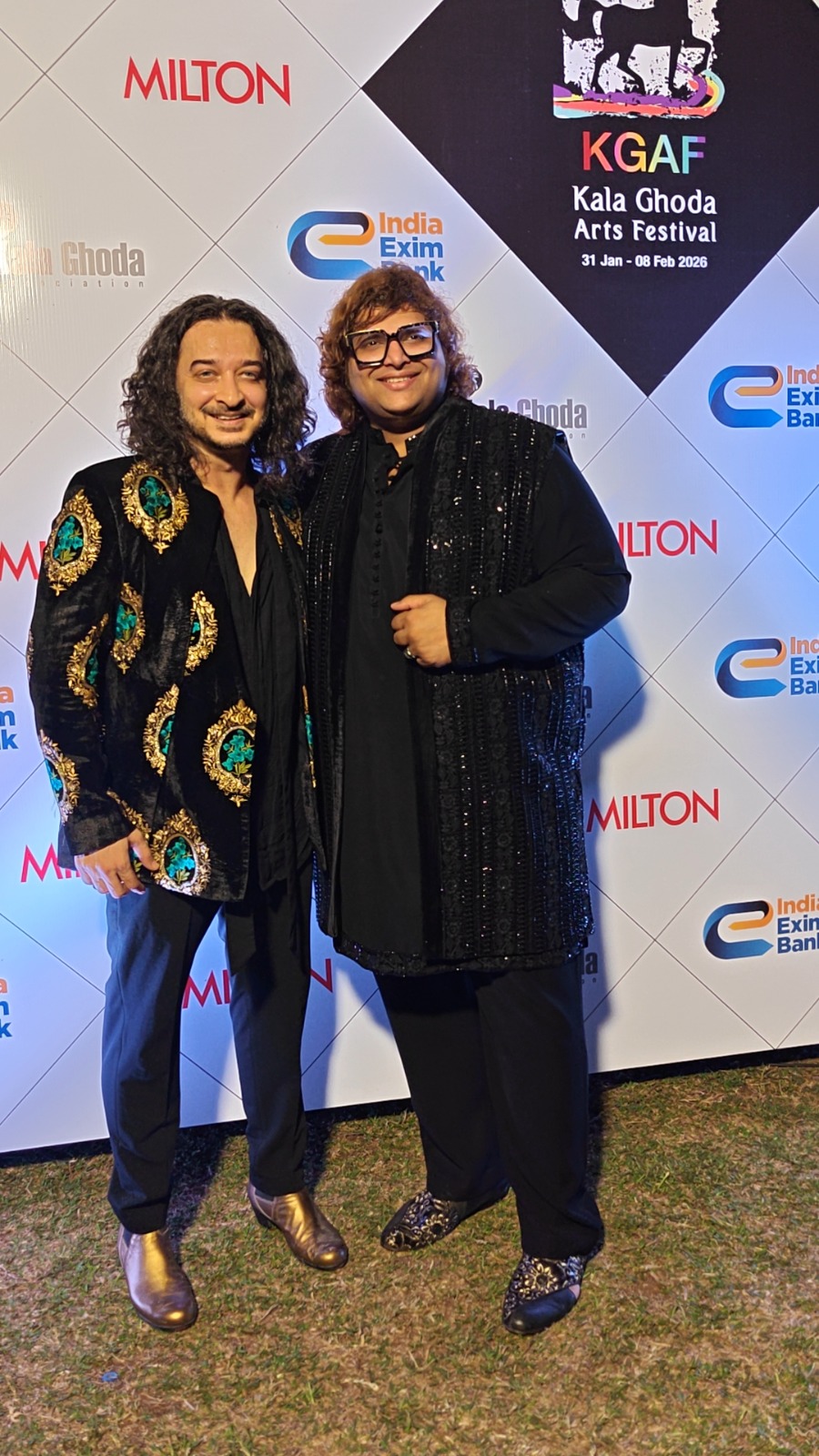
The stage at Kala Ghoda Arts Festival transformed into a powerful crossroads of cultures as audiences at Cross Maidan witnessed India’s first-ever Sufi–Flamenco fusion performance. The collaboration brought together Qawwali singer and music producer Mujtaba Aziz Naza and Flamenco artist Kunal Om, creating a dynamic artistic exchange between two deeply expressive traditions.
Blending the spiritual expanse of Sufi Qawwali with the rhythmic fire of Spanish Flamenco, the performance revealed how two geographically distant art forms share common ground in emotional storytelling, improvisation, and percussive dialogue. What unfolded felt less like an experiment and more like an organic meeting of musical and physical expression.
Leading the sonic journey, Mujtaba Aziz Naza delivered soaring vocals, layered melodic movements, and surging rhythmic crescendos that define the Qawwali tradition. His performance carried devotional intensity and expansive musical architecture, drawing the audience into a rising tide of sound and spiritual energy.
Responding through movement, Kunal Om embodied Flamenco’s signature vocabulary — sharp palmas, resonant zapateado, and sculpted, dramatic lines. Rather than softening either style, the performance allowed both forms to retain their strength, meeting through shared intensity, timing, and emotional force.
As the Qawwali compositions climbed toward their natural peaks, the Flamenco footwork accelerated with precision and power. When rhythm took the lead, movement answered. When melody soared, the body echoed. The result was a live conversation between voice and movement, discipline and passion.
Reflecting on the collaboration, Mujtaba Aziz Naza shared that Sufi music connects beyond language, and that Flamenco joined Qawwali as a dialogue of rhythm and spirit. Kunal Om noted that both traditions thrive on emotional fire and percussive strength, allowing them to challenge and elevate each other on stage.
For Brinda Miller, Festival Director of the Kala Ghoda Arts Festival, the performance embodied the festival’s spirit of cross-cultural dialogue through the arts. She observed that traditions from different worlds can speak a shared creative language through rhythm and performance.
That evening at Cross Maidan, the stage became a meeting ground of devotion and drama — Hindustan and Andalusia connected not through novelty, but through shared artistic fire.