Chennai: For retired and elderly homeowners, purchasing a home elevator is often a major financial decision made around safety, accessibility and long-term convenience. But when such customers seek refunds or resolutions and allegedly struggle to receive satisfactory responses, the issue becomes one of consumer accountability.
The questions surrounding Odyssey Elevators become even more significant when considered alongside the technology claims made by its leadership.
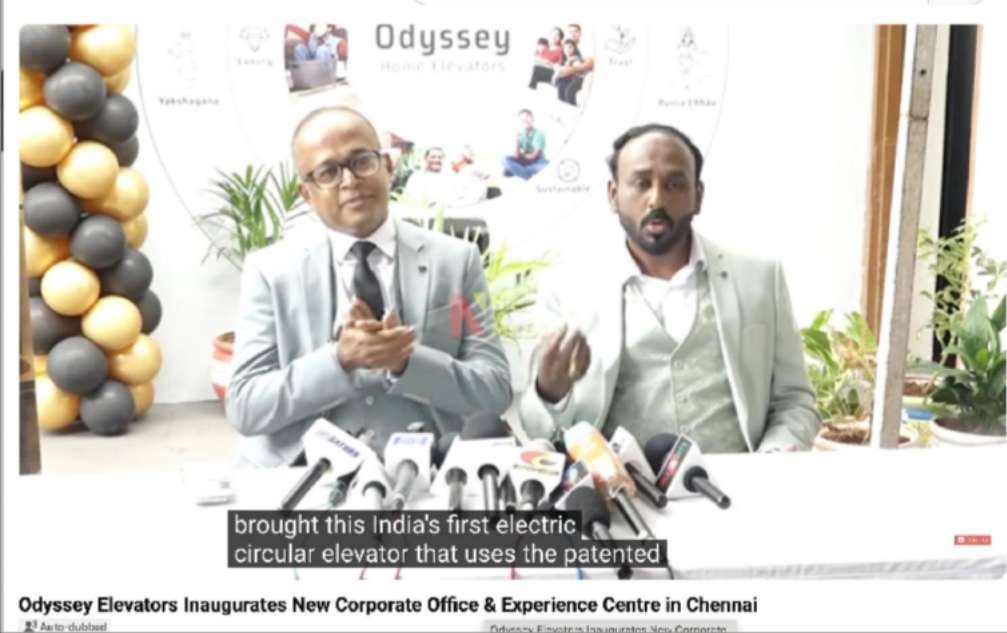
In an interview, Odyssey co-founder Raamkumar is documented as describing the company’s product as “India’s First Electric circular elevator” and stating that the company uses European technology and that its lifts are 100% imported from Europe.
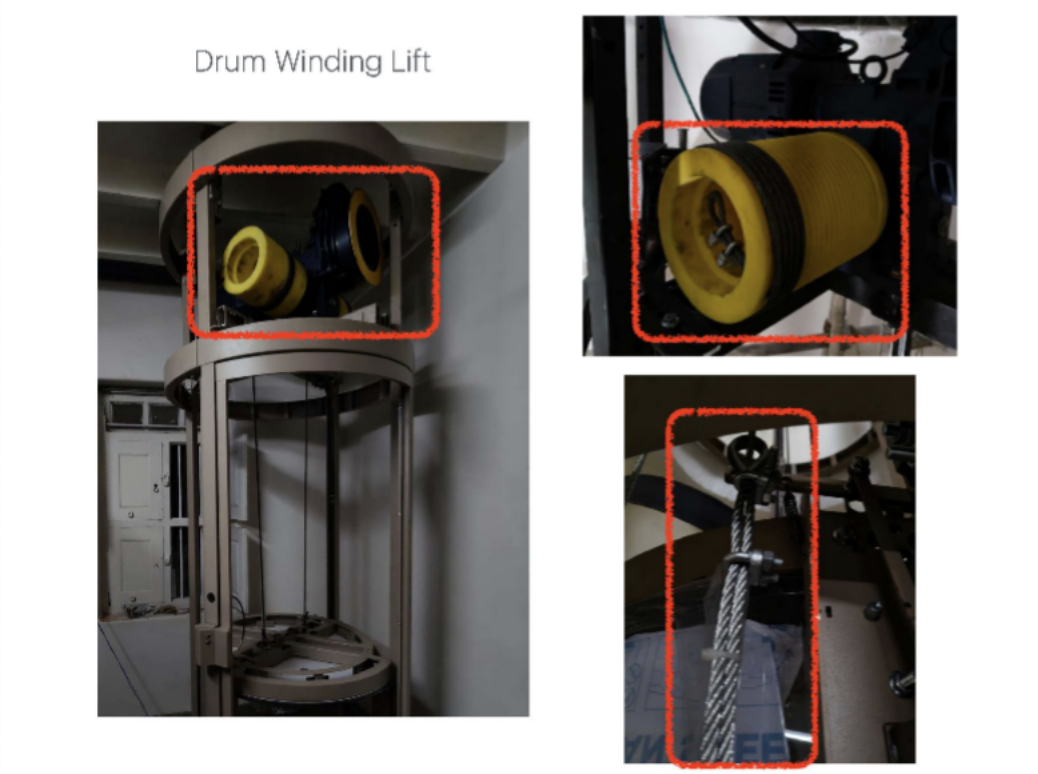
However, the supplied documentation identifies the technology as drum winding, This comes into light when only you install the lift.
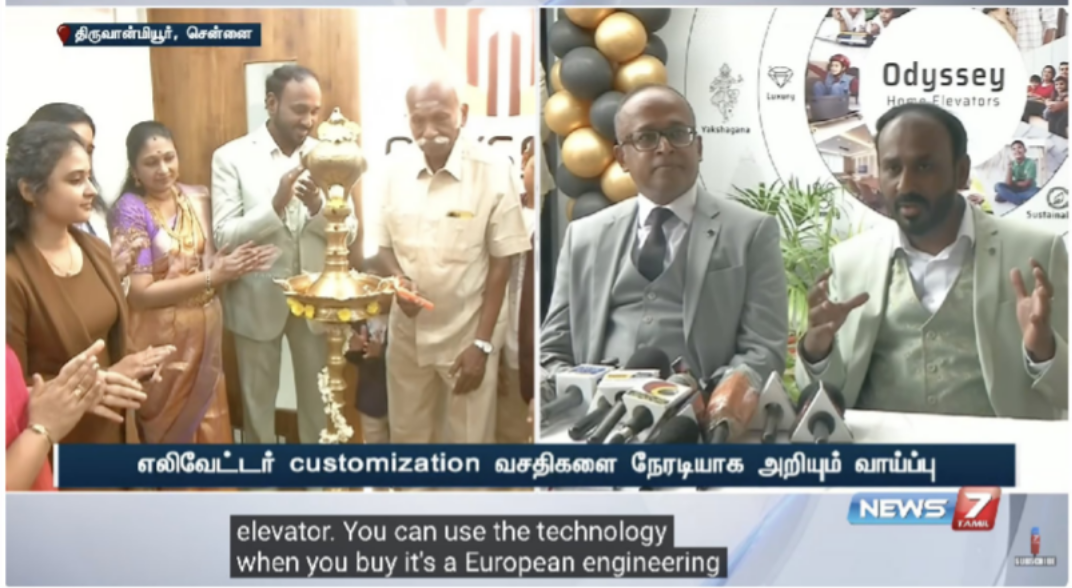
Mr. Raamkumar adds by saying they are European technology and 100% imported from Europe.
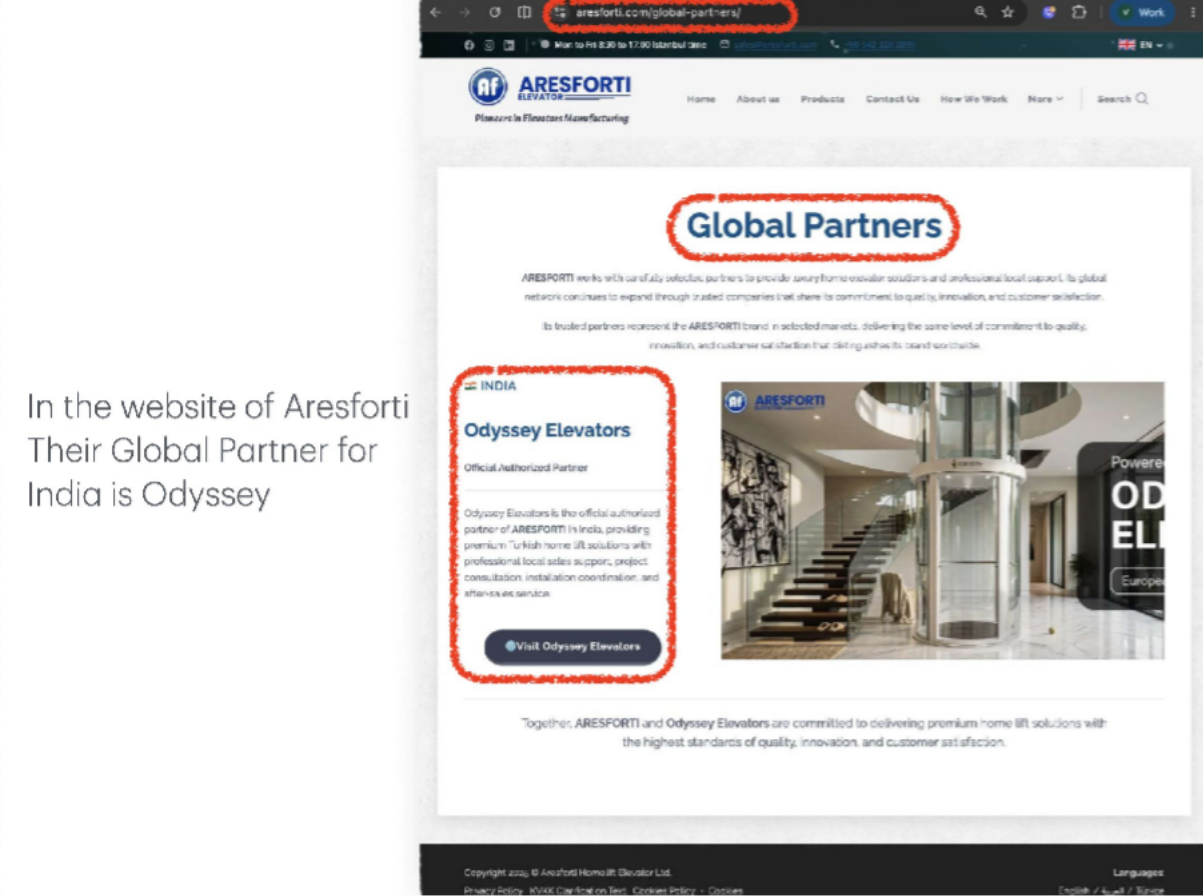
However, their partner, Aresforti, the company from which they reportedly procure the lifts, is based in Turkey. While Turkey has territory in Europe, it is not a member of the European Union. This raises questions about how the products are being represented as being from “Europe” in their public communications and interview. If the products are manufactured in Turkey, consumers may reasonably ask why the distinction between Turkey and the European Union has not been made clear.
This raises an uncomfortable question about the leadership itself:
How deeply qualified and experienced is the leadership team in elevator engineering and lift technology if a technology that is being presented to consumers as new or distinctive is identified as drum-winding technology?
Is this a case of sophisticated marketing terminology being used to position an established technology as something fundamentally different? Or does the leadership genuinely believe that the technology being marketed represents a new category within the elevator industry?
Either possibility deserves clarification.
If the leadership is experienced in the elevator industry, customers have a reasonable basis to ask why fundamental technology terminology appears to be presented differently from what is identified in the available documentation.
If the leadership is not technically specialised in elevator engineering, another question emerges: who is providing the technical expertise behind these claims, and who is ultimately accountable for what customers are being told?
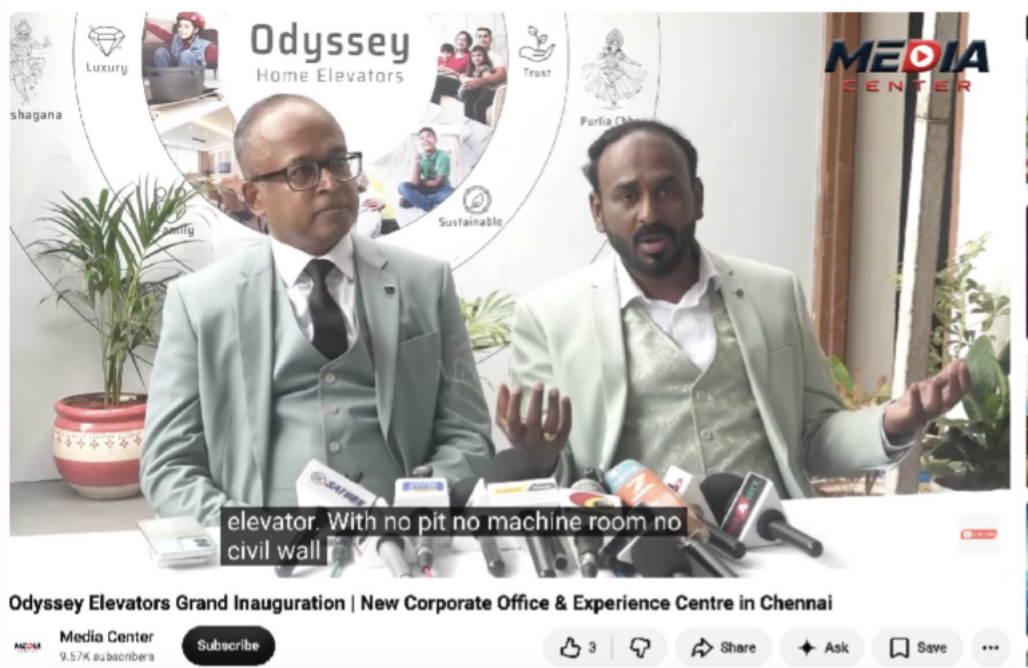
The issue becomes particularly important for elderly customers who may not have the technical ability to distinguish between traction, drum-winding and other elevator configurations. They may instead rely on representations made by the company’s founders and sales representatives.
While the interview reportedly states that the lift does not require a pit, the installation manual is said to specify a 120 mm pit or a requirement to raise the lift 120 mm above ground level (by adding a ramp).
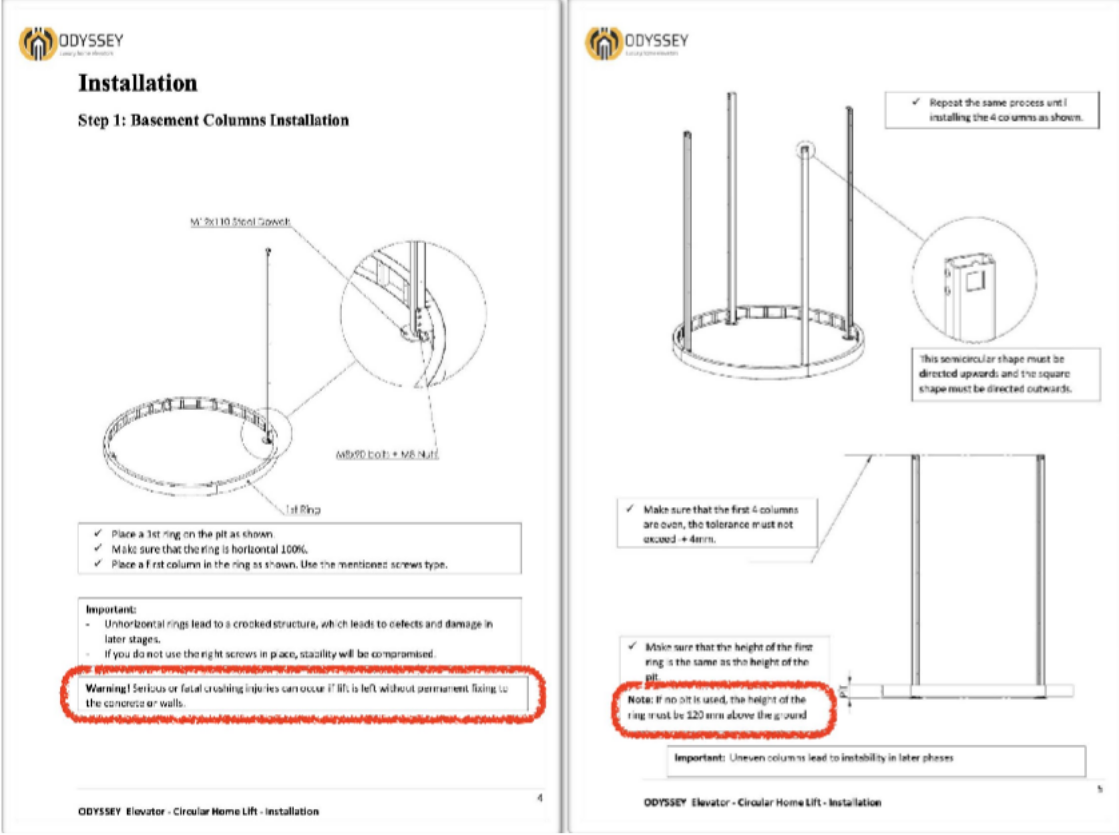
For a customer, these are not minor technical details. They can affect the construction requirements, cost, installation expectations and the decision to purchase.
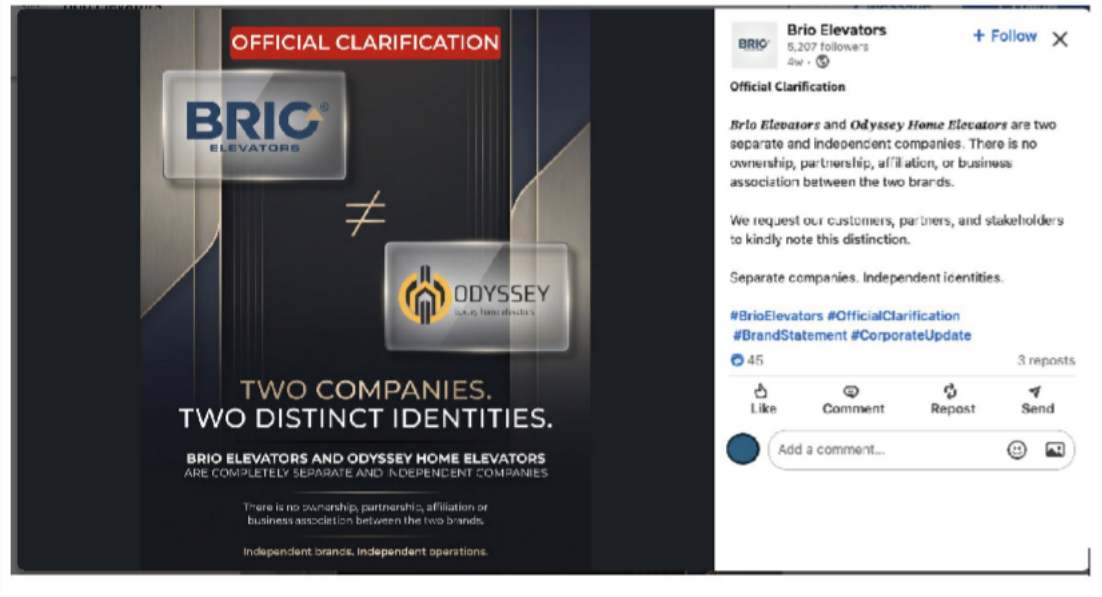
If the same leadership team is associated with both Odyssey and Brio Elevators, why are the two brands being presented as completely independent entities?
With overlapping leadership and business connections, customers deserve greater clarity about who actually owns, operates, and stands behind each brand.
If the companies are genuinely independent, why not openly explain the relationship and remove any ambiguity for consumers?
That brings the focus back to customers who say they are seeking refunds.
When an elderly or retired customer questions the product they purchased, who is responsible for answering them—the promoters, the technical team, the sales team or the company itself?
And if customers are asking for their money back, are their concerns being addressed through a transparent process?
The leadership should clarify its technical qualifications and experience in the elevator industry, identify the professionals responsible for validating the company’s technology claims and explain the basis on which the product is being described as a new or first-of-its-kind electric elevator.
Customers should also be able to understand exactly what they are paying for.
A premium price and premium branding cannot substitute for technical clarity. If the product uses drum-winding technology, customers deserve to know that clearly. If the company considers its implementation materially different from conventional drum-winding systems, it should explain precisely how and provide supporting technical documentation.
For retired customers who have invested their savings, the issue is ultimately about trust.
Are customers dealing with an elevator company led by people with deep technical expertise in the industry—or with a leadership team that has mastered the art of marketing technology without adequately explaining the technology itself?
That is a question Odyssey & Brio elevators leadership should answer directly.