
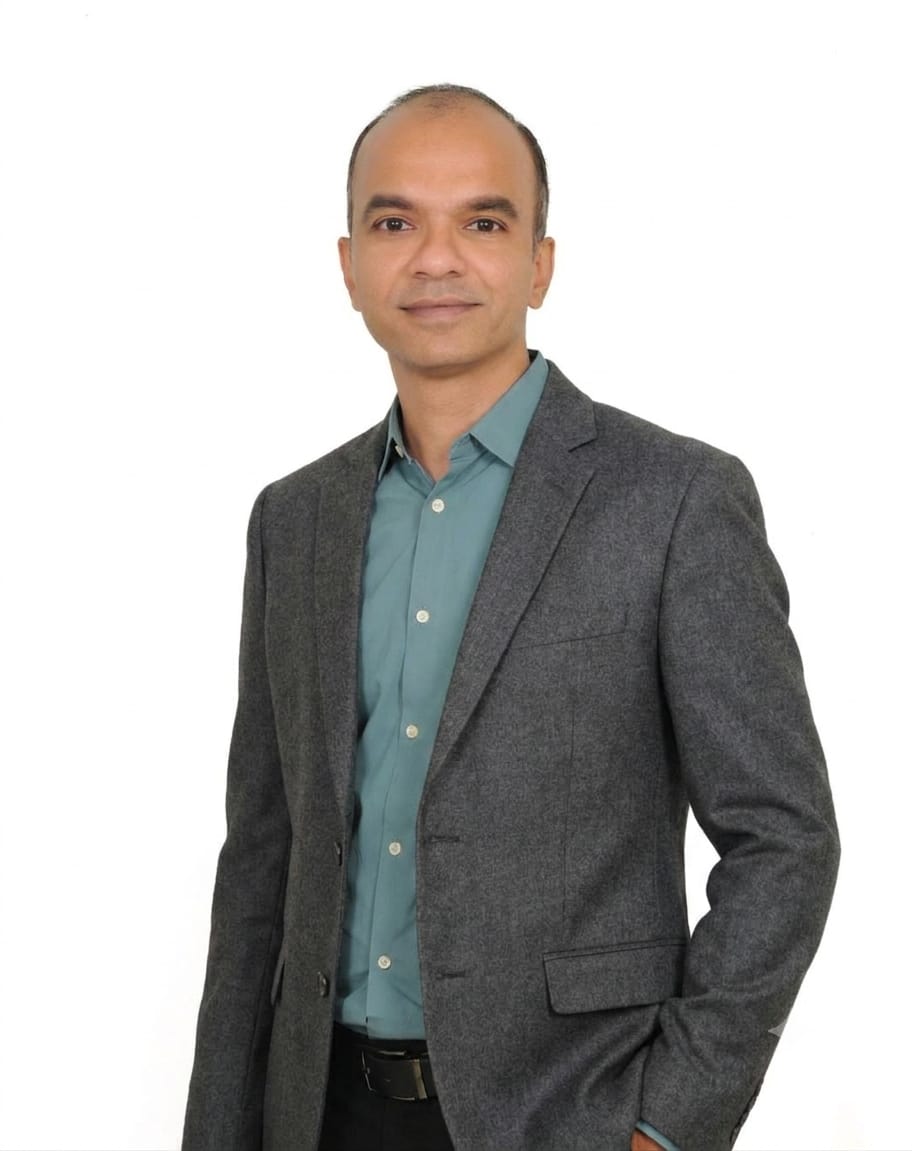
Finance Executive | NBFC Leader | Startup & Venture Debt Investor
With an MBA in Finance and more than 16 years of experience in the financial sector, Harsh Gandhi has built his career around lending, financial services and investment management. He currently serves as the Managing Director of Nalin Lease Finance Limited, an RBI-registered and BSE-listed NBFC based in Gujarat.
The company has an established presence in vehicle finance across North Gujarat, serving customers in districts including Sabarkantha, Aravalli, Banaskantha, Mehsana and adjoining areas. Gandhi’s professional approach combines local market understanding with disciplined credit assessment and a focus on responsible lending.
In 2015, Gandhi identified an opportunity to expand organized gold-backed lending in regional markets. At a time when many borrowers continued to depend on informal sources of finance, he saw potential in providing gold loans through a more structured and transparent institutional model.
The company commenced its gold loan operations in 2016, gradually building its presence in the segment. The focus was particularly on semi-urban and rural markets, where gold is widely held by households and can provide borrowers with access to secured credit.
The objective was not only to provide finance but also to make the borrowing process more structured, transparent and accessible. Over time, gold finance became an important part of the company’s lending activities.
A major focus of Gandhi’s lending approach has been the semi-urban and rural borrower. Small traders, entrepreneurs, farmers and self-employed individuals often require timely working capital or personal finance but may have limited access to conventional banking channels.
His approach emphasizes understanding the borrower’s actual financial requirement and repayment capacity before extending credit.
The lending process combines financial documentation, credit assessment, field-level verification and an understanding of local businesses and cash flows. The objective is to maintain a balance between customer affordability, credit quality and sustainable returns.
This approach also supports the broader movement from informal borrowing towards regulated financial institutions, where customers can access more transparent lending processes.
Gandhi has also focused on emerging opportunities in secured lending. Following the RBI’s regulatory framework permitting eligible NBFCs to lend against silver collateral, the company commenced silver-backed lending from April 2026.
The move represents an expansion of the company’s secured-lending portfolio beyond gold. Silver is widely held by households, particularly in India’s regional markets, and could provide another avenue for borrowers seeking secured credit.
The company sees the segment as an emerging opportunity and intends to develop the business within the applicable regulatory framework and its own credit and risk-management policies.
Gandhi’s interests extend beyond traditional retail lending. He has also developed a focus on startup debt and venture debt investments, particularly businesses where debt can complement growth without relying entirely on equity capital.
His investment philosophy is based on fundamentals, cash flows and risk assessment, rather than simply pursuing high-growth businesses.
Before considering an investment, he evaluates several factors, including – Promoter and management quality, Business model and profitability prospects, Debt-servicing capacity, Repayment visibility, Overall credit and downside risk.
For Gandhi, sustainable lending is not simply about increasing loan disbursements. It requires a balance between portfolio growth, credit quality, customer affordability, operating efficiency and risk-adjusted returns.
His experience across vehicle finance, gold finance and emerging debt opportunities has given him exposure to different segments of credit market—from individual borrowers and small businesses to startups and growing enterprises.
Harsh Gandhi’s career reflects the changing nature of India’s financial landscape. As formal credit continues to expand beyond major metropolitan centres, small businesses, entrepreneurs, self-employed individuals and households in regional markets are likely to remain important participants in the country’s credit ecosystem.
By combining financial analysis with local-market understanding, Gandhi’s approach focuses on building a lending model that seeks to balance business growth, responsible lending, risk management and financial inclusion.
His journey from vehicle and gold finance to silver-backed lending and startup debt reflects a broader strategy: identifying emerging credit opportunities early while maintaining a disciplined approach to capital deployment and repayment risk.